


Sunscreen, Makeup, and Skincare Before a Nose Piercing Appointment: What to Confirm with Your Piercer
Updated: Sep 2
📌 Key Takeaways
Your piercer should confirm how much of the planned nose-piercing area must be free of sunscreen, makeup, and skincare.
Confirm The Clear Area: Ask whether the exact piercing spot, surrounding skin, nose, or entire face must be product-free.
Support Proper Skin Prep: Makeup, sunscreen, lotions, and oils may leave residue that affects marking and skin preparation.
Avoid Harsh Cleaning: If products are already applied, ask the studio before scrubbing, exfoliating, or using strong cleaning products.
Keep Prescriptions Unchanged: Discuss prescription skincare changes with the prescribing clinician, while telling your piercer what you use near your nose.
Get Medical Guidance: A doctor should assess any active rash, wound, allergic reaction, or skin condition at the planned site.
Clear instructions prevent unnecessary changes and appointment-day surprises.
People preparing for a Hialeah nose-piercing appointment will arrive ready by using the studio-specific guidance that follows below.
~ ~ ~ ~ ~ ~ ~ ~ ~ ~ ~ ~ ~ ~ ~ ~ ~ ~
You have a nose-piercing appointment later today, and your morning already included sunscreen, moisturizer, and foundation. The immediate question is not which of those products is bad. The question is what your piercer needs on the intended placement area when the appointment begins.
There is no industry-wide ban on wearing sunscreen, makeup, or skincare before a nose piercing. What matters most is keeping the intended placement area accessible for proper marking and skin preparation and following any day-of instructions provided by your piercer.
Here is what to confirm with your piercer before you leave home, ensuring you arrive at your Hialeah appointment fully prepared—without having to overhaul your entire routine.
The Short Answer: Confirm What Your Piercer Wants on the Placement Area

Rather than guessing which products to skip, contact the studio before your appointment and ask one direct question: what should be on the intended piercing area when you arrive?
Pay attention to the scope of the answer. The instruction may apply to:
The exact spot where the piercing will be placed.
The nose and immediate surrounding skin.
The entire face.
Only the moment right before the procedure, not the whole day.
Professional piercing includes preparing the skin before the procedure. Makeup, sunscreen, lotions, and oils can leave residue around the intended site, so a piercer may want that area clear before marking and skin preparation. To ensure a safe and hygienic piercing environment, artists use a single-use antiseptic wipe—such as iodine or medical-grade alcohol—to thoroughly prep and disinfect the skin. Heavy makeup or thick sunscreen can act as a shield, preventing these antiseptics from fully penetrating down to the skin barrier. That does not necessarily mean your entire face needs to be product-free.
Each of those is a different level of preparation. Knowing which one your piercer means prevents you from either showing up with a full skincare routine where the needle needs to go or stripping your entire face unnecessarily hours before the appointment. It also reduces the chance of arriving and discovering that the piercer expected something different around the planned placement area.
Sunscreen, Makeup, and Skincare Before the Appointment
If you are wearing sunscreen, foundation, concealer, moisturizer, serum, facial oil, or another skincare product, focus on what is directly on or around the intended piercing site. Ask whether that area should be product-free before you arrive and how much surrounding skin the piercer needs clear. You generally do not need a separate preparation rule for every product on the rest of your face.
If you use a prescribed topical treatment (such as a prescription acne medication, retinoid, or other dermatologic product), do not stop or change that treatment based on a general preparation article. Medication changes should be discussed with the clinician who prescribed the product. You can separately let your piercer know what you use on your nose so they have the necessary context.
If you have a current skin condition, allergic reaction, wound, or active rash on the piercing site, consult a doctor rather than relying on general guidelines. Contact a licensed healthcare professional for individualized medical guidance before the appointment.
If Products Are Already on Your Face
Do not aggressively scrub, exfoliate, use rubbing alcohol or hydrogen peroxide, or try to “sterilize” the nose area yourself. If products are already on or around the intended placement area, tell the studio what you applied and ask whether anything needs to be removed before arrival.
What to Confirm Before You Leave
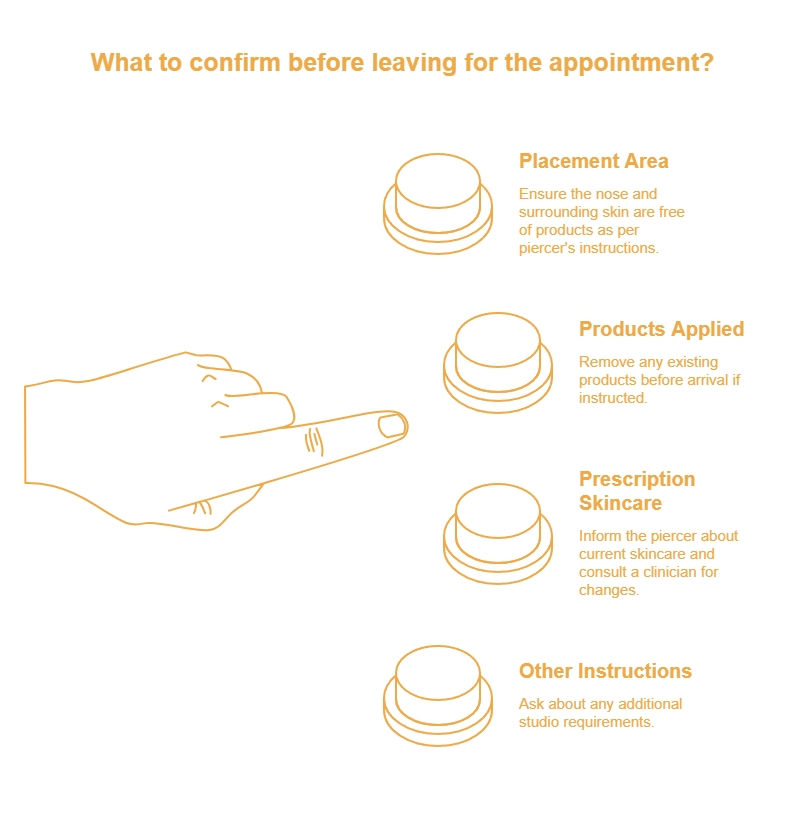
Placement area: Does the nose or surrounding skin need to be free of sunscreen, makeup, moisturizer, or other skincare before arrival?
Products already applied: If something is already on the area, should it be removed before you come in?
Prescription skincare: Tell the piercer what you use near the planned placement area, but discuss changes to prescribed treatment with the prescribing clinician.
Other instructions: Ask whether the studio has any additional preparation requirements for your appointment.
Fame Tattoos in Hialeah offers nose piercing services using 100% disposable, single-use sterile equipment. If sunscreen, makeup, or skincare will be on or around the piercing site on appointment day, contact the studio beforehand for any specific preparation instructions.
Prepare for the Appointment Without Overcomplicating Your Routine
You do not need to redesign your skincare routine or spend the morning researching cosmetic chemistry. Keep the intended placement area in mind, follow the studio’s preparation instructions, and avoid unnecessary last-minute scrubbing or product removal.
If you are also planning around a specific date, you may find it helpful to read about when to schedule a nose piercing before a big event in Miami or Hialeah.
Frequently Asked Questions
Can I wear sunscreen, makeup, or skincare to a nose-piercing appointment?
You may be able to wear products elsewhere on your face, but the piercer may want the intended placement area clear for marking and skin preparation. Check the studio’s instructions if products will be on or around your nose when you arrive.
Should I stop prescription acne or skincare products before a nose piercing?
Do not stop or change a prescribed treatment based on general piercing-preparation guidance. Discuss any medication changes with the clinician who prescribed the product. You can separately let your piercer know what you use near the planned placement area.
Disclaimer: This article is for general informational purposes only and does not provide medical advice, diagnosis, or treatment. For questions about your individual health, skin condition, or prescribed treatments, consult a licensed healthcare professional. For studio-specific nose-piercing preparation, follow the instructions provided by your professional piercer.
Editorial Process
The Fame Tattoos Insights Team creates educational body art resources based on client questions, studio experience, safety-first standards, and professional research. AI tools may support organization and drafting, but final content should be reviewed, rewritten, and fact-checked by qualified human editors before publication.
About the Fame Tattoos Insights Team
The Fame Tattoos Editorial Team creates clear, safety-conscious body art guides based on studio experience, client questions, and professional aftercare standards. Every guide is reviewed for accuracy, clarity, and practical usefulness before publication.


.jpg)
.jpg)

.jpg)
.jpg)

.jpg)
.jpg)
.jpg)
.jpg)