



How to Prepare for Your Miami Black and Grey Realism Session
📌 Key Takeaways
Black and grey realism sessions demand weeks of deliberate skin prep, hydration, and logistical planning to achieve smooth gradients and lasting detail.
Two-Week Sunburn Window: Protect your placement area from UV exposure for 14 days pre-session—sunburned skin won't hold ink properly.
Hydration Compounds Daily: Start drinking consistent water two weeks out; dehydrated skin compromises ink retention and healing predictability.
Carbs Sustain Long Sits: Complex carbohydrates stabilize blood sugar better than protein alone during multi-hour shading sessions.
Miami Climate Adds Risk: Humidity, heat, and intense UV require stricter sun protection and longer post-session beach/pool avoidance than other climates.
Reschedule Without Guilt: Fever, sunburn, or compromised skin increases infection risk—studios prefer postponing over tattooing unprepared canvases.
Prepared skin and body = cleaner saturation and faster healing.
Miami residents planning multi-hour realism pieces will gain a clear prep roadmap here, setting up the session-day logistics and aftercare guidance that follows.
You've chosen your artist. You've locked in your design. Now there's just one thing standing between you and that piece you've been imagining: the session itself.
And if you're feeling a knot in your stomach—wondering if you'll sit well, if your skin will cooperate, if you're somehow going to mess this up—that's completely normal. Black and grey realism isn't a quick flash. It's hours of detailed shading, smooth gradients, and meticulous layering. Your body has to show up ready.
Success comes down to a handful of practical steps: no guesswork, no last-minute panic, and a clear plan that starts two weeks out and carries you calmly through the door.
Here's your timeline.
What Black and Grey Realism Demands (and Why Prep Matters)
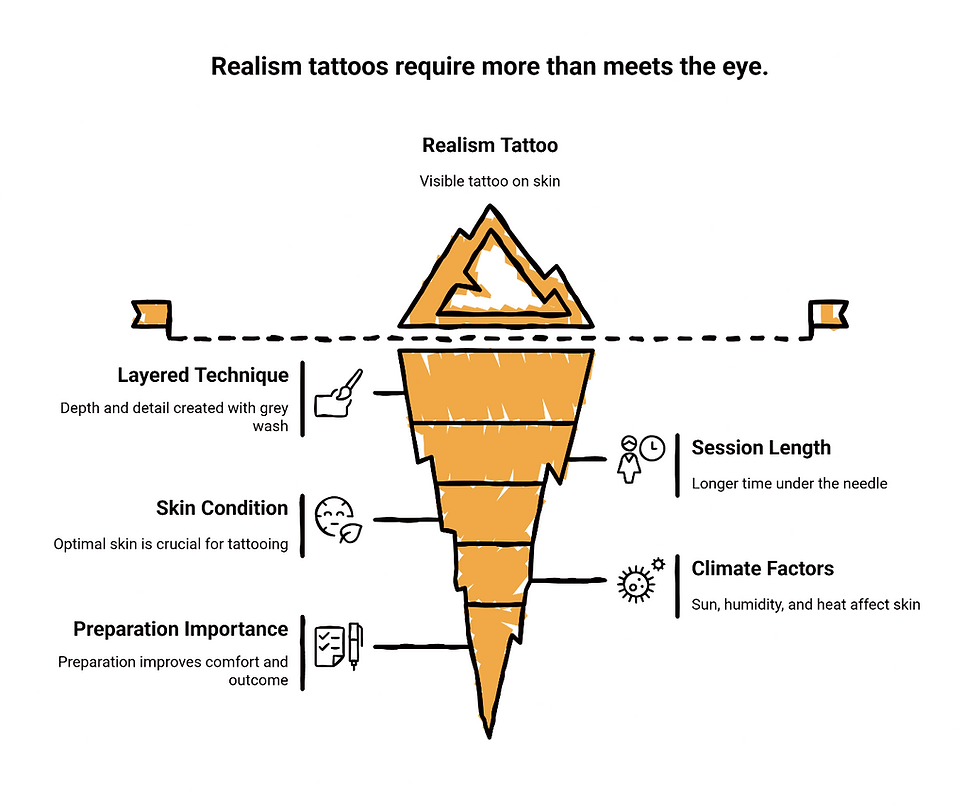
Realism tattoos are built in layers. Your artist isn't just outlining a shape and filling it in. They're creating depth, contrast, and fine detail through careful grey wash techniques and precise saturation. That means longer sessions, more time under the needle, and a canvas—your skin—that needs to be in optimal condition.
In Miami, you're also working with a climate that can sabotage your prep if you're not careful. Sun exposure, humidity, and heat all affect how your skin behaves before, during, and after the session. A sunburn compromises the canvas. Dehydration affects how you sit. Ignoring these factors doesn't just make the session harder—it can impact how your realism piece heals and looks long-term.
Proper preparation increases comfort, supports skin readiness, and directly improves your realism tattoo outcome.
Your Prep Timeline (Simple and Realistic)

Two Weeks Out
This is when you start protecting your placement area like it's already tattooed.
Avoid sunburn and heavy tanning. If your placement area gets even mildly sunburned, your skin isn't a clean canvas. The stencil won't adhere properly, and your artist will have to work around compromised tissue. In Miami's climate, this means being strategic about beach days and pool time. If you're planning outdoor activities, either schedule them well after your appointment or cover the area with clothing and SPF 50+ sunscreen.
Hydrate daily. Not just the day before—start now. Hydrated skin holds ink better and heals more predictably. Aim for consistent water intake throughout the day.
Moisturize the area, but keep it simple. Use a fragrance-free lotion once or twice a day. Avoid introducing new skincare products, chemical peels, or aggressive exfoliants on the placement area during this window. If you regularly wax or use laser hair removal on the area, pause those treatments until after your session heals.
72 Hours Out
This is when you shift focus to your body's internal readiness.
Limit alcohol consumption. While alcohol is a known blood thinner, its primary drawback three days out is dehydration and inflammation. Heavy drinking now suppresses your immune system and dries out your skin, making the session harder on your body. Strictly avoid alcohol within 24 hours of your appointment to prevent excessive bleeding, which can dilute the ink and compromise the saturation of your black and grey gradients.
Skip intense workouts right before if they leave the area irritated or inflamed. Light exercise is fine, but avoid anything that causes heavy friction or swelling in the placement area.
Confirm your appointment details. Double-check your start time, estimated duration, and how breaks will be handled. Make sure you know the payment method accepted and bring a valid ID. If your placement area requires removing clothing (like a back piece or ribcage tattoo), plan accordingly.
24 Hours Out: Your Session Prep Checklist
Sleep:
Get 7–9 hours of quality sleep
Set alarms and plan for Miami traffic—give yourself a time buffer
Nutrition:
Eat a balanced, substantial meal. While protein is essential, complex carbohydrates (oats, brown rice, whole grain toast) are the key to sustaining your energy levels over a long sit. A mix of protein and slow-digesting carbs keeps your blood sugar stable and prevents lightheadedness during detailed shading work.
Prep snacks and bring them (trail mix, protein bars, fruit)
Fill a water bottle and pack electrolyte drinks
Hygiene:
Shower thoroughly
Avoid applying heavy lotions or oils on the placement area right before (your artist will prep the skin)
Clothing:
Pack loose, dark clothing that won't rub the fresh tattoo
Bring a layer for studio air conditioning (studios run cold to keep equipment and artists comfortable)
Logistics:
Confirm you have your ID
Know where you're parking and how long it takes to get there
Plan for the session to run longer than estimated—don't schedule anything tight afterward
Day-of Session
Eat again before you arrive. Even if you're not hungry, your blood sugar needs to stay stable. Bring your water, your snacks, and your headphones if you prefer music or a podcast during the session.
Arrive on time. Rushing in stressed sets the wrong tone for a long session.
Communicate with your artist. If you need breaks, say so. If your pain tolerance is lower than you expected, speak up. A good realism session is a collaboration, not an endurance test.
Avoid numbing creams unless your artist has approved them in advance. Some numbing products interfere with how the skin takes ink, and many artists prefer to work without them.
What to Bring to a Long Realism Session
You're going to be in that chair for hours. Pack smart.
Water and a snack. Even if the studio offers water, bring your own so you're never waiting.
Headphones and a charger. Music, podcasts, or audiobooks help pass the time.
A layer for air conditioning. Studios keep temperatures low, and you'll feel it during a long session.
Reference images or notes (one page max). If there are specific details you want to discuss, bring a simple printout. Don't hand your artist a novel.
If you're still exploring style direction, the black and grey tattoos service page provides a baseline reference for the look you want.
Miami-Specific Prep: Sun, Heat, Humidity
Miami's environment requires a few extra considerations.
Miami Reality Check: If your placement area gets even mildly sunburned, your skin isn't a clean canvas. Protect it—especially in Miami. The stencil won't sit properly, and your artist may refuse to work on compromised skin. Rescheduling protects your art.
Humidity and sweat can irritate skin and complicate the healing process. After your session, you'll need to avoid soaking the tattoo, which means no beach, no pool, and no hot tubs for at least two weeks. Plan your social calendar accordingly.
Heat can make sitting for long sessions more uncomfortable. Dress in layers so you can adjust as needed, and make sure you're hydrating even more than usual in the days leading up to your appointment.
Health and Safety: When to Postpone (No Guilt)
Sometimes the best decision is to reschedule.
If you have fever, flu symptoms, an active infection, fresh sunburn, open wounds, or a severe rash, contact the studio and move your appointment. Tattooing on compromised skin increases the risk of infection and poor healing, according to the American Academy of Dermatology. [1]
If you're pregnant, immunocompromised, or taking medications that affect blood clotting, consult a qualified healthcare professional before your appointment. The Mayo Clinic notes that certain health conditions can increase the risk of complications from tattooing. [2] The FDA also emphasizes understanding tattoo safety risks before proceeding. [3]
Florida law requires that both the artist and the establishment hold valid licenses issued by the Department of Health to ensure strict health and safety standards are met. But your health is your responsibility. If something feels off, speak up.
"I noticed the cleanliness and the importance they give to their workspace to be clean, which to me is my first priority." — Camila P. (Google Reviews)
This isn't about being difficult. It's about protecting the outcome you've invested time and money into.
Right After the Session: The First 24 Hours
Once your artist finishes, they'll wrap your tattoo and give you specific aftercare instructions. Follow them exactly.
Within a few hours, you'll gently wash the tattoo with lukewarm water and a mild, fragrance-free soap. Pat it dry with a clean paper towel—never a cloth towel that might harbor bacteria. Apply a thin layer of the aftercare product your artist recommends.
Avoid soaking the tattoo. That means no swimming, no hot tubs, and no long baths. Showers are fine, but keep them brief and avoid letting the water beat directly on the fresh ink.
Avoid heavy sweating for the first few days. This means no intense workouts, no saunas, and no prolonged time in Miami's heat if you can help it.
Your tattoo will look bold and saturated when it's fresh. As it heals over the next few weeks, expect the contrast to soften slightly. This is normal. Black and grey realism is designed with the healed result in mind, not just the fresh appearance.
For detailed guidance on the full healing process, see our tattoo aftercare guide.
Frequently Asked Questions
Can I go to the beach before or after my appointment?
Before: Not without total coverage. Direct sun exposure is strictly prohibited within two weeks of your session. Sunburn compromises the canvas. After: Wait at least two weeks, and even then, keep the healed tattoo protected with SPF 50+ sunscreen. UV exposure is the primary cause of tattoo fading over time.
What should I wear for a sleeve or back piece?
Wear something loose and dark that you don't mind getting ink on. For a sleeve, a tank top or button-up shirt works well. For a back piece, bring a loose zip-up hoodie or an oversized shirt you can drape over your shoulders. Avoid anything tight or restrictive that will rub the fresh tattoo on your way home.
How long will a realism session take?
It depends on the size and complexity of the piece. A small portrait might take 3–4 hours. A full sleeve could require multiple sessions totaling 20+ hours. Your artist will give you an estimate during your design consultation, but always assume it might run longer. Don't schedule anything tight afterward.
Is it normal to feel shaky or lightheaded?
Yes, especially during longer sessions. Your body is responding to pain, adrenaline, and the physical stress of sitting still. This is why eating beforehand, bringing snacks, and staying hydrated matters. If you start feeling faint, tell your artist immediately. Take a break, eat something, and drink water. There's no shame in pausing.
When should I reschedule instead of pushing through?
If you're sick, sunburned, or dealing with any open wounds or skin irritation in the placement area, reschedule. If you didn't sleep, didn't eat, or showed up dehydrated and shaky, be honest with your artist. A good studio would rather move your appointment than tattoo you in poor condition. Pushing through when your body isn't ready leads to a worse experience and a worse result.
Next Step: Lock in Your Consult and Get Your Design Moving
You've done the research. You know what matters. Now it's time to move from preparation to action.
Black and grey realism demands precision, and precision starts with a clear plan. Whether you're memorializing someone, covering an old piece, or bringing a concept to life, your session prep is the foundation for how that art will look and heal.
If you're ready to sit with an artist who understands the craft and the details that matter, start with a design consultation. You'll discuss placement, reference images, and session logistics so there are no surprises when you walk in.
When you're ready to move forward:
Sources
[1] American Academy of Dermatology – Caring for tattooed skin: https://www.aad.org/public/everyday-care/skin-care-basics/tattoos/caring-for-tattooed-skin
[2] Mayo Clinic – Tattoos: Understand risks and precautions: https://www.mayoclinic.org/healthy-lifestyle/adult-health/in-depth/tattoos-and-piercings/art-20045067
[3] FDA – Think Before You Ink: Tattoo Safety: https://www.fda.gov/consumers/consumer-updates/think-you-ink-tattoo-safety
[4] Florida Statutes – 381.00777 Tattoo establishments; licensure: https://www.flsenate.gov/Laws/Statutes/2024/0381.00777
Disclaimer: This article is for informational purposes only and is not medical advice. If you have a medical condition, are pregnant, take blood thinners, or are immunocompromised, consult a qualified healthcare professional before getting tattooed.
Our Editorial Process
Our expert team uses AI tools to help research, organize, and refine content—but every article is carefully reviewed and edited by humans to ensure accuracy, readability, and value. Our goal is to create an unbiased editorial experience that respects your time and helps you make informed decisions.
About the Fame Tattoos Insights Team
The Fame Tattoos Insights Team is our dedicated engine for creating helpful, well-researched content about tattoo artistry, aftercare, and the tattoo experience. Our work is grounded in industry expertise, customer feedback, and a commitment to transparency. All content is for informational purposes and should not replace professional advice from a licensed tattoo artist or healthcare provider.


.jpg)
.jpg)

.jpg)
.jpg)

.jpg)
.jpg)
.jpg)
.jpg)