



Microblading vs. Tattooing: Understanding the Difference for Natural Results
Updated: Mar 8
📌 Key Takeaways
Microblading creates natural-looking brows through superficial pigment placement that fades gradually, while traditional tattooing deposits permanent ink deeper in the skin.
Depth Controls Everything: Superficial papillary dermis placement allows pigment to metabolize naturally over 1-3 years instead of becoming permanent.
Skin Type Determines Technique: Normal to dry skin holds crisp hair strokes, while oily skin benefits from powder brows to prevent blurring.
Pigment Prevents Color Shifts: Smaller cosmetic pigment molecules fade into soft browns, avoiding the blue-green oxidation traditional tattoo ink creates.
Miami Climate Demands Protection: Daily SPF 50+ application with wax-based sticks and 12-month touch-ups counter humidity and intense UV exposure.
Healed Photos Reveal Truth: Six-month-old results show actual technique quality, while fresh work misleads about long-term appearance.
Shallow placement plus proper pigment equals brows that soften gracefully, not harshly.
People in South Florida considering cosmetic tattooing will gain clarity on technique selection and realistic maintenance expectations, preparing them for the detailed consultation guidance that follows.
~ ~ ~ ~ ~ ~ ~ ~ ~ ~ ~ ~ ~ ~ ~ ~ ~ ~ ~ ~ ~ ~ ~ ~ ~ ~ ~ ~ ~ ~ ~ ~ ~ ~ ~ ~ ~ ~ ~ ~ ~ ~ ~ ~ ~ ~ ~ ~ ~ ~ ~ ~
You're staring at your bathroom mirror. Again. The brow pencil isn't cooperating. One side is too thick. The other won't match. You're already ten minutes late, and the Florida humidity is going to melt this off before you even reach your car.
You've seen those flawless, wake-up-ready brows on Instagram. The ones that survive the gym, the beach, the relentless Miami heat. But there's one thing stopping you: what if they look fake? What if I'm stuck with sharpie brows forever?
Here's what you need to know: microblading isn't the same as getting a traditional tattoo, even though the two are often confused. The technique, the tools, the results—they're fundamentally different. And understanding these differences is the key to getting brows that look natural, not permanent marker.
Microblading vs. Tattooing: The 10-Second Answer
Microblading is a form of cosmetic tattooing, but it uses a manual hand tool with ultra-fine needles to create hyper-realistic hair-like strokes in the upper dermis layer of skin. Traditional tattooing uses an electric machine that deposits ink deeper into the skin, creating solid, block-like color. Microblading uses pigment formulated to fade naturally over 1-3 years, while traditional tattoo ink is designed to be permanent and can oxidize into blue or green tones over time.
The practical difference? Microblading mimics individual brow hairs with precision. Traditional tattooing creates a filled, makeup-like appearance that tends to look harsher as it ages.
Is Microblading a Tattoo? (Yes—But Not the Way You Think)
Let's clear this up right away: microblading is a form of tattooing. Specifically, it's called permanent makeup or cosmetic tattooing. But calling it "a tattoo" the way most people understand tattoos is like calling a smartphone "a phone." Technically true, but it misses the entire point.
Traditional tattooing was designed for body art—images, text, designs that last forever. The tools, the ink chemistry, the depth of placement—everything is engineered for permanence.
Microblading was designed for faces. For brows. For subtle enhancement that ages gracefully with you, not against you. The method is closer to brow embroidery—sometimes called 3D brow embroidery—or feather-touch shading than the bold linework of a traditional tattoo.
As professionals in the field often explain it: "It's technically a tattoo, but the application is closer to embroidery than body art."
Think of it this way: both a crayon and an oil painting use pigment on a surface. But you wouldn't frame a crayon drawing and hang it in a gallery. The technique changes everything.
Tool Difference: Manual Blade vs. Tattoo Machine
Here's where the "hair-stroke" magic happens.

Traditional tattooing uses an electric machine with a motor that rapidly punctures the skin—thousands of times per minute, often ranging from 50 to over 100 punctures per second depending on the machine's frequency setting. The needle grouping is designed to deposit solid blocks of color quickly and evenly. It's efficient for filling large areas or creating bold outlines.
Microblading uses a manual handheld tool with a row of ultra-fine needles arranged in a blade formation. The artist controls every single stroke by hand, mimicking the natural direction, curve, and taper of real eyebrow hairs. Each stroke is placed individually, with intention, following the natural growth pattern of your brows.
The result? When performed correctly by a skilled artist, microblading creates texture. It looks like hair because it's drawn the way hair actually grows—not stamped on in a uniform block.
This is why you see some eyebrow tattoos that look like two solid rectangles above the eyes, and others that look so natural you can't tell they're not real. The tool determines the texture.
Depth Difference: Why Depth Controls Softness and Fading
The depth of pigment placement is one of the most misunderstood aspects of permanent makeup—and it's the reason some brows fade naturally while others turn into harsh, lifelong stamps.
Traditional tattoos are placed deep in the reticular layer of the dermis. While the exact depth varies by body part, this placement is significantly deeper than cosmetic work to ensure the ink stays stable and permanent. Your body's immune system can't reach it effectively to break it down, so it remains vivid for decades.
Microblading targets the upper dermis—much more superficial, usually into the papillary dermis. This shallower placement is intentional. It allows the pigment to gradually fade as your body naturally metabolizes the smaller pigment molecules over time. The strokes stay crisp initially but soften as they age, creating a more natural, less "tattooed" appearance.
Here's the trade-off: because microblading is placed superficially, it won't last forever. Depending on your skin type, lifestyle, and aftercare, you'll need a touch-up every 12 to 18 months to maintain the crisp definition. For many clients, this is a feature, not a flaw—it means you're not locked into one shape or shade for life.
Pigment vs. Ink: Why Some Brows Turn Blue or Green
If you've ever seen someone with brows that faded into an unnatural blue, gray, or green tone, you've witnessed the consequences of using the wrong product at the wrong depth.
Traditional tattoo ink uses larger molecular structures formulated for permanence. These larger particles are stable deep in the skin because the immune system's macrophages cannot effectively break them down. However, they can oxidize over time when exposed to UV light and the body's natural processes. Black ink, in particular, can break down into blue or green hues as these molecules fragment.
Microblading pigment is specifically formulated for cosmetic use on the face. It uses smaller pigment molecules designed to fade, not oxidize. High-quality pigments are iron-oxide based but calibrated to break down into lighter, softer versions of the original color—not into unnatural tones. When placed at the correct superficial depth, these pigments fade gradually into a soft, warm brown or taupe, eventually disappearing entirely as the body metabolizes them.
The blue-green brow phenomenon happens when artists use traditional tattoo ink or when pigment is placed too deep. At deeper layers, even cosmetic pigment can behave unpredictably. This is why the combination of proper pigment and proper depth is non-negotiable for natural results.
For general consumer information on tattoo and permanent makeup safety, see the U.S. Food & Drug Administration's guidance on tattoos and permanent makeup.
What Looks Most Natural (And For Whom)?
Here's the pivot point that most articles skip: microblading isn't the best choice for everyone.
Your skin type, oil production, and pore size determine whether individual strokes will stay crisp or blur into a soft shadow. A skilled artist doesn't push one technique on every client—they assess your skin and recommend the method that will heal best on you.
Microblading works beautifully for:
Normal to dry skin
Fine to medium pore size
Clients who want defined, strand-by-strand detail
Powder brows or ombre shading work better for:
Oily skin
Large, visible pores
Very active lifestyles (excessive sweating can blur fine strokes)
Clients who prefer a softer, filled-in look
If you have oily skin and insist on microblading, the strokes may blur together within months, creating a less defined, makeup-like appearance. It's not a failure of the technique—it's a mismatch between your skin and the method.
This is why consultations matter. The best artists guide you toward the technique that will give you natural results, not the technique they're most comfortable performing.
Miami and Hialeah Reality Check: Humidity, Sweat, and Sun
Let's talk about what no generic microblading article will tell you: your environment affects your results.
Miami isn't exactly known for dry, cool weather. Between the humidity, the gym, the beach, and year-round sun exposure, your brows are in a high-stress climate.
Humidity and sweat won't ruin healed microblading, but they do accelerate fading. If you're someone who works out six days a week or spends weekends on the boat, expect to need touch-ups closer to every 12 months rather than 18.
Sun exposure is the bigger concern. UV rays break down pigment faster than anything else. If you're outside frequently—whether for work, beach days, or just running errands—you need to apply SPF 50+ over your brows daily once they're fully healed (using a wax-based stick works best to avoid running). Skip this step, and your beautiful new brows will fade to a pale ghost of themselves within months.
Think of the first phase of healing as building your "wake-up-ready shield"—brows that reduce daily makeup stress. Protect that investment early with careful aftercare so the healed result stays soft and even for the long term.
This isn't a reason to avoid microblading in South Florida. It's just a reality check: the technique works beautifully here, but it requires realistic expectations and consistent aftercare. The payoff—waking up with perfect brows every single day, even after a swim—is still worth it for most clients.
How to Choose an Artist (Avoid the "Assembly Line")
Here's where clients make or break their results.
You can have the perfect technique, the best pigment, and ideal skin type—but if your artist is rushing through appointments to maximize volume, your brows will reflect that.
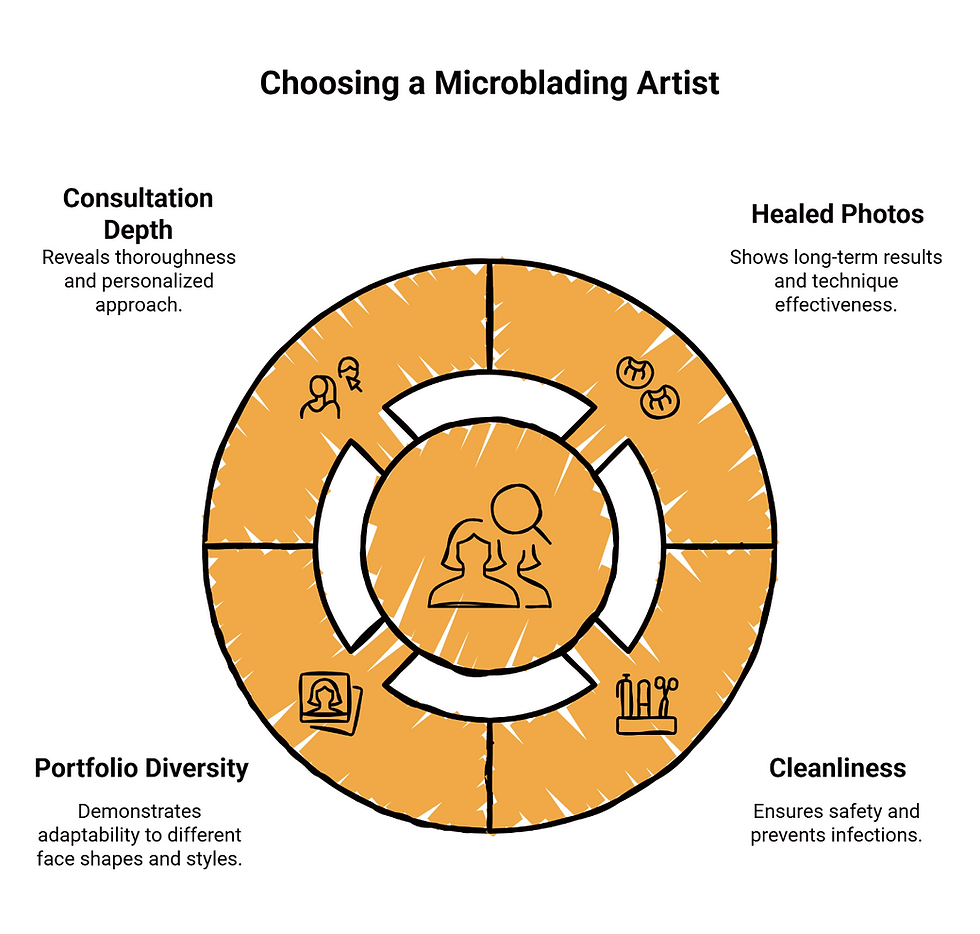
What to look for in an artist:
Healed photos, not fresh work. Fresh microblading always looks crisp and beautiful. Healed work—six months to a year later—shows you what the technique actually delivers over time. If an artist only shows fresh results, that's a red flag.
Cleanliness and sterilization protocols. As one client shared in a review: "Everything they used was sterilized... they opened all the packages in front of me." This isn't excessive—it's standard. If you don't see single-use, sterile tools being opened in your presence, leave. For context on bloodborne pathogen safety standards in professional settings, see OSHA's bloodborne pathogens regulations.
Portfolio diversity. Every face is different. An artist who can only execute one brow shape or style isn't customizing work—they're applying a template. Look for a portfolio that shows a range of face shapes, skin tones, and brow styles.
Consultation depth. A good artist will spend time analyzing your facial structure, brow bone, natural hair growth pattern, and skin type—what professionals call brow architecture. They'll ask about your lifestyle, your concerns, and your aesthetic goals. They won't just draw on a shape and start working.
As another reviewer put it: "Most tattoo places here are money hungry and in a rush, but this place takes their time to get to know what type of tattoo you want." That patience isn't about being slow—it's about being thorough.
The difference between a sanctuary experience and an assembly line comes down to whether the artist sees you as a person or a timeslot.
Comparison Chart: Microblading vs. Traditional Tattooing
Factor | Microblading | Traditional Tattooing |
Tool | Manual handheld blade with ultra-fine needles | Electric machine with motorized needle |
Technique | Individual hair-like strokes placed by hand | Solid block color or bold outlines |
Pigment/Ink | Cosmetic pigment formulated to fade naturally | Tattoo ink formulated for permanence |
Depth | Superficial (upper dermis, papillary layer) | Deep reticular dermis (varies by skin thickness) |
Longevity | 1–3 years, requires touch-ups | Permanent (decades) |
Fading Behavior | Fades to lighter, softer tones; eventually disappears | Can oxidize into blue/green tones over time |
Appearance | Hair-like texture, mimics natural brows | Solid, filled-in, makeup-like appearance |
Best For | Natural enhancement, those wanting flexibility | Bold, long-lasting body art |
Frequently Asked Questions
Does microblading hurt?
Most clients describe it as mild discomfort rather than pain. A topical numbing cream is applied before the procedure to minimize sensation. The feeling is often compared to light scratching or tweezing.
How long does microblading last?
Typically 1 to 3 years, depending on skin type, lifestyle, and aftercare. Oily skin and frequent sun exposure can shorten longevity, while dry skin and diligent SPF use can extend it.
What if I don't like the shape?
This is why the consultation and design approval process is critical. A reputable artist will draw the shape, show you the placement, and make adjustments before any pigment touches your skin. Once healed, microblading can be adjusted with additional strokes or allowed to fade naturally over time.
Can microblading be removed or corrected?
Yes, though it's more complex than letting it fade naturally. Correction options vary depending on what was done and how the skin healed. Methods include saline removal, laser treatment, or color correction by an experienced artist. For clients considering change paths, specialized services exist—learn more about tattoo removal in Miami. This is another reason to choose your artist carefully from the start.
How soon can I return to my normal routine after microblading?
You'll need to avoid excessive sweating, swimming, and direct sun exposure for about 7 to 10 days while the skin heals. After that initial healing window, you can return to your regular activities—just commit to daily SPF once fully healed.
Next Step: Get a Personalized Brow Plan
Microblading isn't a one-size-fits-all solution. What works beautifully on your friend's dry skin might blur on your oily complexion. The shape that flatters a round face might overwhelm an angular one.
The only way to know what will work for you is a personalized consultation with an artist who will assess your skin, your facial structure, and your lifestyle before recommending a technique.
At Fame Tattoos, consultations focus on designing brows that complement your unique features—not applying a template. The team takes the time to walk you through realistic expectations, show you healed portfolio examples, and answer every question you have before you commit.
Ready to see what's possible? Schedule your free design consultation or view the permanent makeup portfolio to see healed results.
Disclaimer: This information is educational and not medical advice. Always consult a qualified professional for personal guidance regarding cosmetic procedures.
Our Editorial Process:
We create our guides from studio experience and published best practices, then review them for clarity and accuracy before publishing.
By: The Fame Tattoos Insights Team
The Fame Tattoos Insights Team is our dedicated engine for synthesizing complex topics into clear, helpful guides. While our content is thoroughly reviewed for clarity and accuracy, it is for informational purposes and should not replace professional advice.


.jpg)
.jpg)

.jpg)
.jpg)

.jpg)
.jpg)
.jpg)
.jpg)